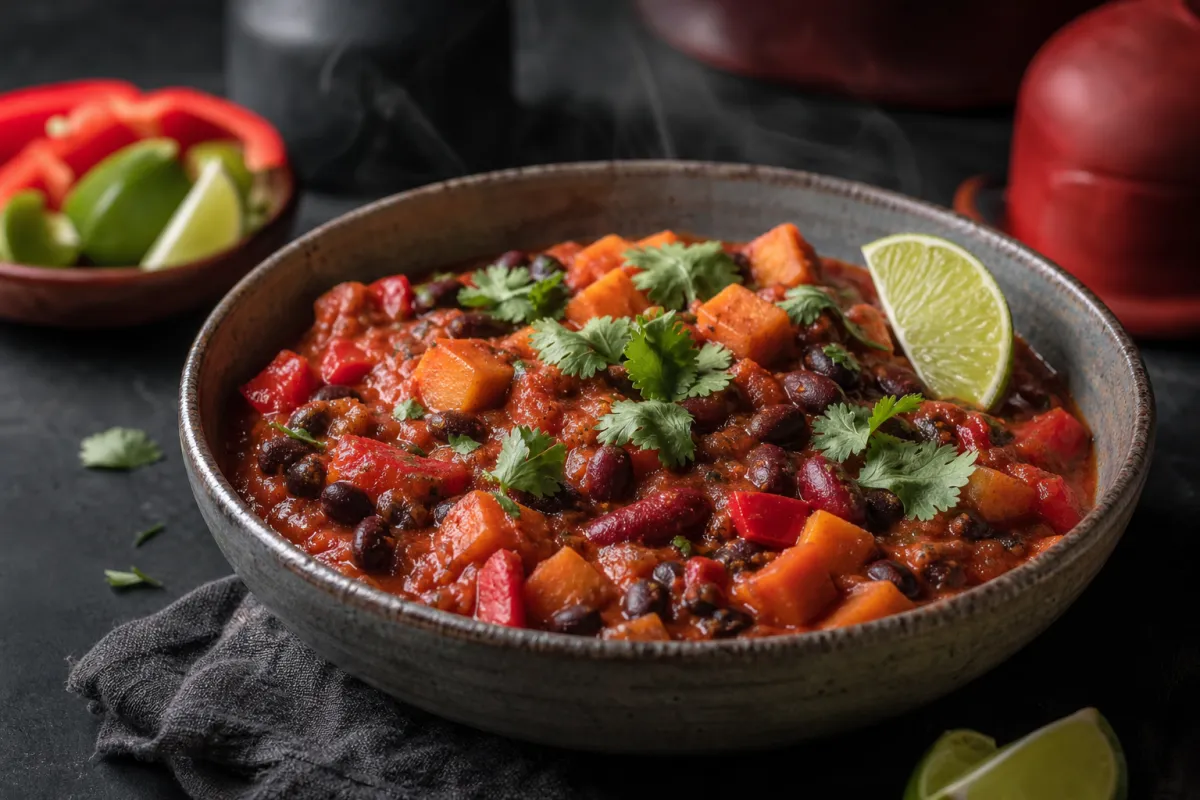
Ingredients
4 ServingsAdd chili gradually and taste — real heat depends on the pepper.
Instructions
- 1
Heat the olive oil in a large, heavy-based saucepan over a medium heat. Add the diced onion and red pepper and cook, stirring occasionally, until softened.
- 2
Add the chopped garlic and cook briefly, stirring so it does not brown.
- 3
Stir in the tomato purée, cumin, smoked paprika, oregano and chilli flakes, if using. Cook until fragrant, stirring continuously.
- 4
Pour in the chopped tomatoes and vegetable stock. Stir well, scraping any browned bits from the base of the pan.
- 5
Add the drained kidney beans and black beans. Stir, bring to a gentle simmer, then cook uncovered, stirring occasionally.
- 6
Stir in the cocoa powder, if using. Simmer until the sauce has thickened and the vegetables are tender.
- 7
Taste and season with salt and black pepper. If the chilli is too thick, stir in a splash of water; if too thin, simmer for a few more minutes.
- 8
Serve hot with lime wedges and your choice of rice, jacket potatoes or warmed tortillas.
What makes a good vegan chilli sin carne
A satisfying chilli does not need a meat substitute. Beans bring plenty of substance, while onion, pepper and tomato create a savoury base. This recipe uses kidney beans and black beans for a mix of creamy and firm textures, but you can use two tins of either if that is what you have.
The flavour develops in stages. Cook the onion until soft, then briefly fry the garlic and spices before adding the tomatoes and stock. That short time in the pan helps the spices become fragrant and prevents the finished chilli from tasting as though the seasoning has simply been stirred in at the end.
A little tomato purée adds depth, and cocoa powder or a square of dark chocolate is an optional way to give the sauce a rounded, earthy finish. Use plain cocoa rather than sweetened drinking chocolate, and check that any chocolate you use is suitable for vegans.
Ingredients and useful swaps
Tinned beans make this a convenient midweek meal. Drain and rinse them before adding, which removes the canning liquid and lets you season the chilli more accurately. If using dried beans, cook them fully before adding them; do not put dried kidney beans straight into this recipe.
Red pepper adds sweetness and colour, but green or yellow pepper works too. You can also add a diced carrot with the onion, or stir in courgette during the last part of cooking. Keep extra vegetables to roughly a mugful so the sauce stays rich rather than watery.
For a deeper smoky note, use smoked paprika. Regular paprika is fine if you prefer a gentler flavour. Chilli flakes are optional and can be increased or left out according to taste. Vegetable stock varies in saltiness, so use a low-salt option if available and adjust the seasoning after simmering.
How to cook it well
Use a broad, heavy-based saucepan or casserole so the vegetables have room to soften without steaming. A few minutes of patient cooking for the onion and pepper makes a noticeable difference to the finished texture. Stir regularly and lower the heat if the onion starts to catch.
After adding the tomatoes and stock, simmer uncovered. This gives excess liquid a chance to evaporate and lets the flavours come together. Stir every so often, especially towards the end, when the sauce thickens and is more likely to stick to the bottom of the pan.
Taste before serving rather than relying only on the quantities of salt and pepper in the recipe. A pinch more salt can bring the tomato and spices into focus; a squeeze of lime or lemon can lift a chilli that tastes a little flat. If it becomes too thick, loosen it with a splash of water or stock.
Choose your heat and toppings
As written, the chilli is mild to medium, depending on the chilli flakes and stock you use. For a family meal, leave out the flakes and put sliced fresh chilli on the table. For more heat, add flakes gradually or stir in a finely chopped fresh chilli with the garlic.
Serve it with rice, baked potatoes or warmed tortillas. For a lighter meal, spoon it over a baked sweet potato or serve with a simple green salad. Rice is best cooked separately so it stays fluffy and does not soak up the chilli sauce.
Fresh toppings make each bowl feel complete. Try chopped coriander, sliced spring onions, diced avocado or a spoonful of vegan yoghurt. Lime wedges are especially useful because their sharpness balances the rich tomato sauce. Keep toppings separate so everyone can choose their own.
Make-ahead, storage and reheating
You can make this chilli a day ahead and keep it covered in the fridge once it has cooled. Cool leftovers promptly, ideally in shallow containers, and refrigerate within two hours. Eat refrigerated leftovers within three days, reheating only the portion you need.
Reheat in a saucepan over a medium-low heat, stirring regularly, until steaming hot throughout. Add a splash of water if the sauce has thickened in the fridge. You can also reheat a single portion in the microwave, stirring halfway through and checking that it is hot all the way through before eating.
The chilli freezes well. Cool it promptly, transfer it to a suitable sealed container and freeze in portions for up to three months for best quality. Defrost overnight in the fridge before reheating until piping hot. Avoid repeatedly cooling and reheating the same batch.
Easy ways to adapt the recipe
For a chunkier chilli, keep the vegetables in larger dice and simmer for a little less time. For a thicker, more cohesive sauce, mash a few beans against the side of the pan near the end of cooking. This thickens the chilli without adding flour or other thickeners.
A small amount of sweetcorn can be stirred in for the final few minutes, or you can replace one bean variety with drained chickpeas. If adding mushrooms, fry them with the onion until their moisture has evaporated before adding the spices and tomatoes.
If you need a gluten-free meal, check the label on your vegetable stock and any toppings or accompaniments. The core ingredients are naturally suitable for a gluten-free version, but packaged products can vary. For a complete meal, pair the chilli with plain rice or potatoes.
Frequently asked questions
Is chilli sin carne the same as vegan chilli?
Chilli sin carne means chilli without meat. It is often made with beans and vegetables and is usually vegan, but check the stock and any optional toppings. This recipe uses plant-based ingredients throughout.
Can I make this chilli less spicy?
Yes. Leave out the chilli flakes and use mild paprika. Serve fresh chilli separately so people can add heat to their own bowls.
Can I use dried beans instead of tinned beans?
Yes, provided you soak and cook dried beans fully before using them. Follow the packet guidance, particularly for kidney beans, which must be thoroughly boiled before being added to the chilli.
How can I thicken vegan chilli sin carne?
Simmer it uncovered for a little longer, stirring often, or mash a few beans into the sauce. If it is already at the thickness you want, avoid adding extra liquid.
Can I make it ahead for a gathering?
Yes. Cook it a day ahead, cool it promptly and refrigerate in a covered container. Reheat in a pan until steaming hot throughout, stirring regularly, and serve rice or other sides separately.
What can I serve with vegan chilli sin carne?
Rice, jacket potatoes and warmed tortillas are all good choices. Add lime wedges, coriander, avocado or vegan yoghurt at the table for freshness and contrast.