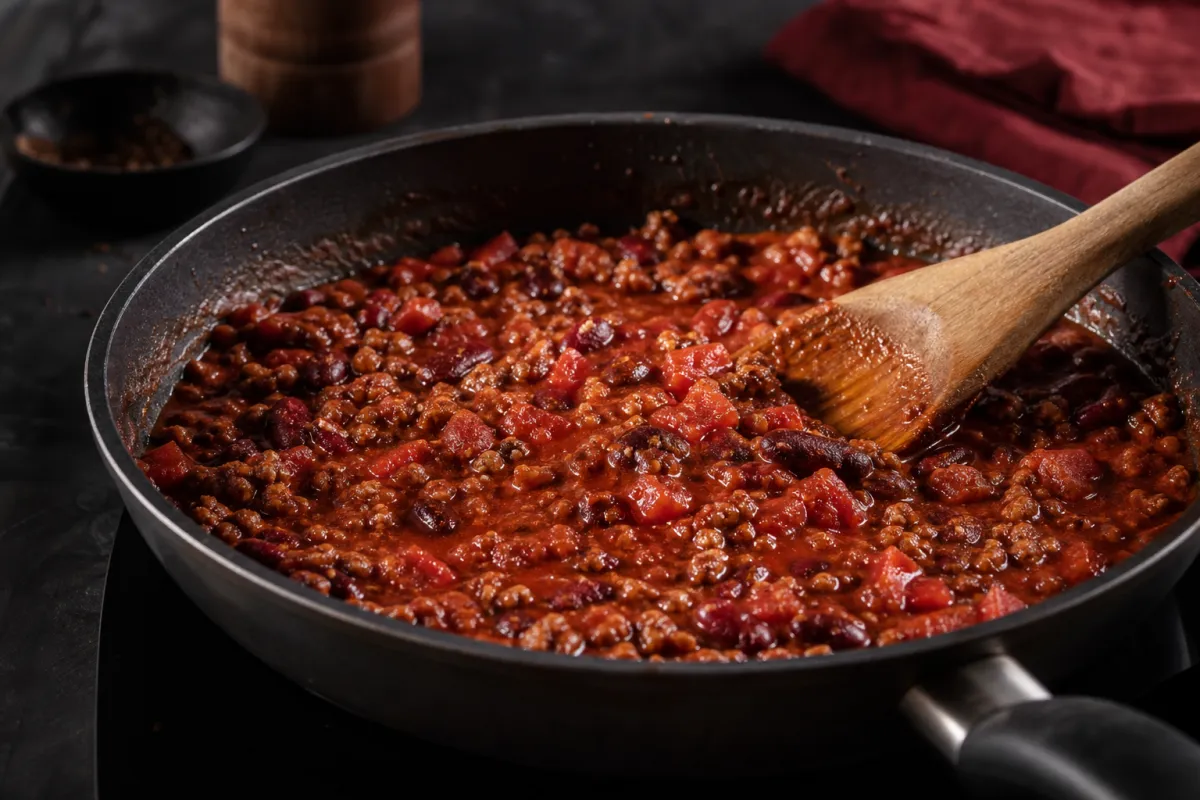
Ingredients
4 ServingsAdd chili gradually and taste — real heat depends on the pepper.
Instructions
- 1
Heat the oil in a wide frying pan or shallow casserole over a medium heat. Add the onion and cook, stirring occasionally, until softened.
- 2
Stir in the garlic, chilli powder, cumin and paprika. Cook briefly, stirring, until fragrant.
- 3
Add the beef mince and raise the heat to medium-high. Break it up with a spoon and cook, stirring now and then, until browned and no raw-looking mince remains.
- 4
Stir in the tomato purée and cook briefly. Add the chopped tomatoes, beef stock and drained kidney beans, scraping up any browned bits from the bottom of the pan.
- 5
Bring the chilli to a gentle simmer, then reduce the heat. Simmer uncovered, stirring occasionally, until the sauce has thickened and the mince is thoroughly cooked through.
- 6
Taste and stir in the salt, pepper and optional sugar. Adjust the chilli powder if needed, then simmer for a little longer if the sauce is too loose.
- 7
Take the pan off the heat and leave the chilli to stand briefly. Stir once more and serve with rice, baked potatoes, tortillas or your chosen sides.
Why this chilli is quick
A good quick chilli relies on building flavour efficiently rather than cooking for hours. Finely chopped onion softens in a few minutes, while the garlic and spices need only a brief spell in the pan to become fragrant. Browning the beef properly gives the sauce a savoury base, so there is no need for a long list of ingredients.
Use a wide frying pan or shallow casserole if you have one. A larger surface helps the mince brown instead of steam, particularly if your pan is not very deep. Break up any large clumps as the meat cooks, but avoid stirring constantly; brief pauses let it make contact with the hot pan.
The sauce simmers for around 15 minutes, enough time for the tomatoes to reduce and the flavours to come together. If it looks too loose, simmer uncovered for a few extra minutes. If it thickens more than you like, add a small splash of water and stir it through.
Ingredients and useful swaps
Beef mince with a little fat tends to give a fuller flavour than very lean mince. If you prefer a leaner option, use lean beef and add a teaspoon of oil if the pan looks dry. Brown the meat until no raw-looking mince remains, then make sure it is thoroughly cooked through in the finished chilli.
Kidney beans are classic in many British versions of chilli con carne, though recipes vary. Drain and rinse them before adding to the pan to remove the canning liquid and excess salt. Pinto beans or black beans also work; use the same drained weight and keep the beans whole for a pleasing contrast to the mince.
Chopped tomatoes provide the main body of the sauce, while tomato purée adds concentrated savouriness. Mild chilli powder keeps this version family-friendly, but chilli powder varies in strength, so start with the stated amount and adjust to taste. A pinch of sugar is optional and can round out particularly sharp tomatoes.
How to make it step by step
Start by chopping the onion fairly finely so it softens quickly. Warm the oil over a medium heat, add the onion and cook until softened rather than deeply browned. Add the garlic and spices only once the onion is ready; a short time in the oil helps release their aroma without scorching them.
Add the mince and turn the heat up to medium-high. Break it apart with a wooden spoon and let it brown in batches if your pan is crowded. Stir in the tomato purée, then add the tomatoes, stock and drained beans. Scrape the bottom of the pan as you stir to lift any browned bits into the sauce.
Bring the mixture to a gentle simmer, then lower the heat and leave it uncovered. Stir occasionally, checking that the sauce is bubbling gently rather than catching on the bottom. Taste near the end and adjust the salt, pepper and chilli powder; seasoning is easier to judge once the sauce has reduced.
Adjust the heat and texture
For a mild chilli, use a mild chilli powder and leave out fresh chillies. To make it hotter, add a pinch more chilli powder or a finely chopped fresh red chilli with the garlic. Increase the heat gradually, tasting as you go; the spice can become more noticeable as the sauce simmers.
For a thicker, more concentrated chilli, simmer it uncovered for a few extra minutes. You can also mash a few beans against the side of the pan and stir them in; their starch helps thicken the sauce without adding anything else. For a looser consistency, add water a tablespoon at a time.
If you have an extra few minutes, let the chilli rest off the heat before serving. The flavours settle, and the sauce thickens slightly as it stands. Keep it covered while it rests, and give it a good stir before spooning it into bowls.
What to serve with chilli con carne
Steamed rice is a simple, filling accompaniment and makes the sauce go further. For a quick meal, start cooking the rice while the chilli simmers. A baked potato or jacket potato is another useful option, especially if you want a more hands-off side.
Warm flour tortillas, tortilla chips or crusty bread are good for scooping up the sauce. Add a spoonful of soured cream or natural yoghurt to cool the chilli, plus grated Cheddar, sliced spring onions or chopped coriander if you like. These are optional extras rather than essentials.
For a lighter plate, serve the chilli with a crisp green salad or sliced avocado. Leftovers also work well spooned over a baked potato, wrapped in a tortilla or served with rice the following day. Keep toppings separate if you expect to store portions.
Make ahead, store and reheat safely
Chilli can be made ahead and reheated, and the flavour often deepens after a night in the fridge. Cool leftovers promptly in shallow containers, then refrigerate within two hours of cooking. Keep them chilled and use within two days, or freeze in portion-sized containers for up to three months.
Defrost frozen chilli in the fridge before reheating, or use a microwave defrost setting and then heat it straight away. Reheat only the portion you need, stirring occasionally, until it is piping hot all the way through. If reheating on the hob, add a splash of water if the sauce has become very thick.
Do not leave cooked chilli sitting at room temperature for an extended period. If serving it from a pan, keep it hot, and refrigerate leftovers promptly. When cooking the mince, ensure it is thoroughly cooked through; if you use a food thermometer, follow its guidance for minced meat.
Frequently asked questions
Can I make this chilli con carne without kidney beans?
Yes. Swap the kidney beans for the same drained weight of pinto beans or black beans, or leave them out and add extra mince or a diced pepper. The sauce may be a little less thick without beans.
How can I make this recipe milder?
Use mild chilli powder and avoid fresh chilli. You can reduce the chilli powder further or leave it out, then serve sliced fresh chilli separately for anyone who wants more heat.
Can I use fresh tomatoes instead of tinned?
You can, but tinned chopped tomatoes are more consistent for a quick sauce. If using fresh tomatoes, chop them and allow extra simmering time until they break down and the sauce thickens.
How do I thicken a chilli that is too watery?
Simmer it uncovered for a few extra minutes, stirring now and then. Mashing a few beans into the sauce also thickens it. Avoid adding flour, which can make the texture pasty.
Can I freeze quick chilli con carne?
Yes. Cool it promptly, portion into suitable containers and freeze for up to three months. Defrost in the fridge and reheat until piping hot throughout, stirring well.
What can I serve with quick chilli con carne?
Serve it with rice, a baked potato, warm tortillas or crusty bread. Soured cream, grated cheese, avocado and a green salad make easy optional additions.