Ingredients
4 ServingsAdd chili gradually and taste — real heat depends on the pepper.
Instructions
- 1
Heat the olive oil in a wide, heavy-based saucepan over a medium heat. Add the onion and carrot and cook, stirring often, until softened. Add the garlic, red pepper and optional fresh chilli and cook briefly.
- 2
Add the beef mince. Break it up with a wooden spoon and cook until browned all over with no pink areas remaining. If the pan is crowded, brown the mince in batches. Spoon off excess fat if needed.
- 3
Stir in the chilli powder, cumin, smoked paprika, oregano and tomato purée. Cook, stirring, until the spices smell fragrant and the purée darkens slightly.
- 4
Add the chopped tomatoes and stock. Stir well, scraping up any browned bits from the base of the pan, then bring the mixture to a gentle simmer.
- 5
Cover loosely and simmer gently, stirring occasionally, until the carrot is tender and the sauce has thickened. Lower the heat if the sauce bubbles vigorously.
- 6
Stir in the drained kidney beans and simmer uncovered until hot throughout. Add a splash of water if the sauce is thicker than you like.
- 7
Taste and season with black pepper and salt if needed. Add lime juice if using, then serve with rice, a baked potato or vegetables and optional toppings.
What makes this chilli a lighter choice
A more balanced chilli does not need to mean a small portion or a sauce stripped of flavour. Here, lean minced beef provides the familiar base, while kidney beans add substance and fibre. Onion, pepper and tomatoes make up a good share of the pan, so the finished dish has plenty of texture and a generous serving of vegetables.
Using lean mince and only a little oil helps keep the dish less rich than versions made with fattier beef or a large amount of added fat. There is no need to drain away every trace of flavour: brown the mince well, then spoon off any excess fat if there is a noticeable pool in the pan. The beans and tomato sauce make the result hearty without needing a very large amount of meat.
The recipe is deliberately seasoned rather than relying on lots of salt. Chilli powder, cumin, smoked paprika and oregano build warmth and savouriness; a little tomato purée deepens the sauce. Stock can vary in saltiness, so choose a lower-salt option if available and taste before adding any extra salt at the end.
Ingredients and useful swaps
Choose beef mince labelled lean, or use lean turkey mince if you prefer a lighter-tasting alternative. Turkey can dry out more readily, so avoid overcooking it during the browning stage and let it simmer gently in the sauce. If you use a plant-based mince, follow its pack instructions for browning and check whether it needs extra oil.
Kidney beans are a classic choice, but black beans or pinto beans work well too. Use drained, rinsed beans to remove some of the canning liquid and help the sauce taste clean rather than overly starchy. A tin of beans is a practical store-cupboard ingredient; the recipe gives the drained weight so you can use the same amount if buying a different pack size.
The pepper and carrot bring sweetness and extra texture without making the chilli taste like a vegetable stew. Finely dice the carrot so it softens during simmering. You can add chopped celery, courgette or mushrooms as well, but keep the total amount moderate and allow any watery vegetables time to cook down before adding the beans.
For a milder family meal, use a mild chilli powder and leave out the optional fresh chilli. For more heat, add a finely chopped red chilli with the onion or offer sliced chilli at the table. Check the label on chilli powder: it can be a blend of spices, while cayenne pepper is much hotter and should be used sparingly.
How to build flavour without extra richness
Give the onion time to soften before adding the mince. This helps create a sweet, savoury base and prevents the pieces from catching while the meat browns. Use a wide, heavy-based saucepan or casserole so the mince has room to brown rather than steam. If the pan is crowded, brown the meat in two batches.
Stir the spices and tomato purée into the browned mince for about a minute before adding the tomatoes and stock. This brief cooking step takes the raw edge off the spices and helps the purée become darker and more savoury. Keep stirring and lower the heat if anything begins to stick; a splash of water can loosen the base.
Once the tomatoes and stock are in, simmer gently rather than boiling hard. A steady simmer gives the carrot time to soften and lets the sauce thicken without scorching. Add the beans towards the end so they warm through but keep their shape. If the chilli looks too thick, add a little water; if it is too thin, simmer uncovered for a few more minutes.
Taste before serving. A small squeeze of lime or a teaspoon of vinegar can brighten a tomato-heavy sauce, while black pepper or a pinch more cumin can round it out. Add salt gradually, especially if your stock was already seasoned. These small adjustments can make a leaner dish taste complete without depending on extra cheese or cream.
Serving ideas that keep the meal balanced
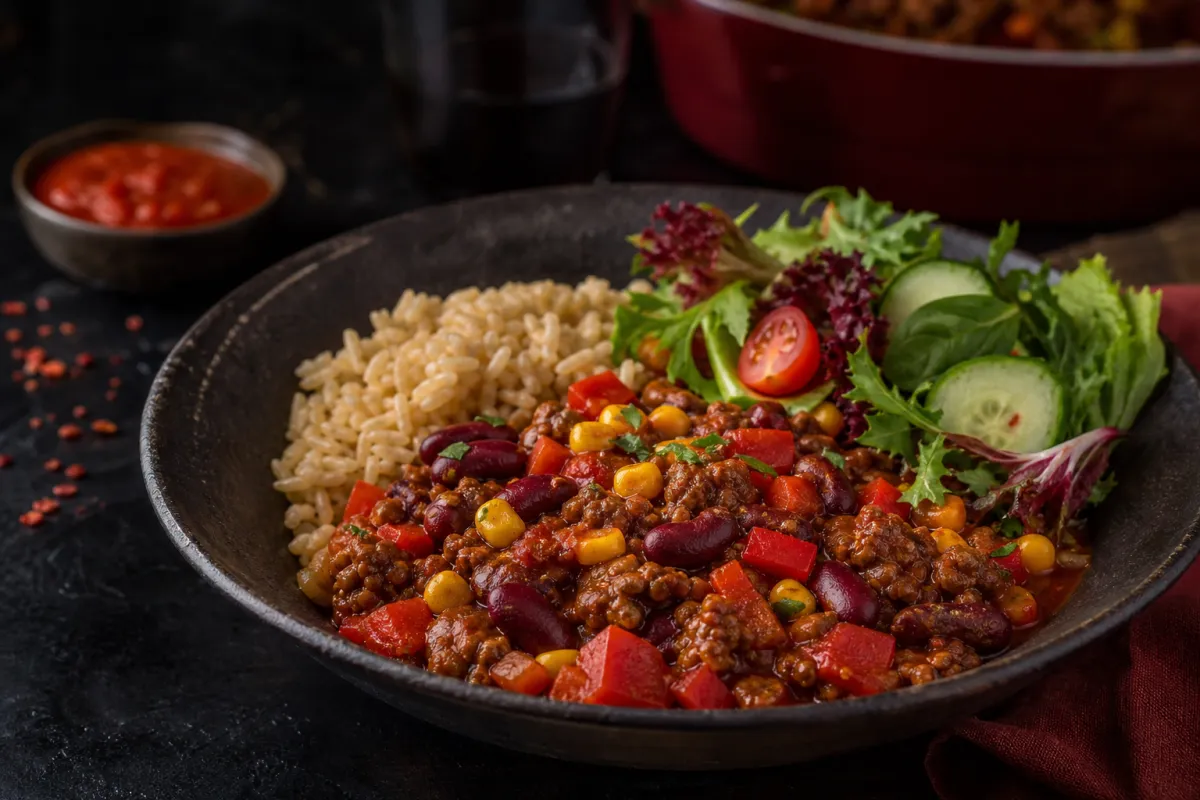
Serve the chilli in a bowl on its own, or spoon it over a modest portion of cooked brown rice. Brown rice has a nuttier bite and takes a little longer to cook than white rice, so start it before the chilli if you are making both from scratch. Plain rice is perfectly suitable too; the best choice is the one your household enjoys.
For a lighter plate, serve it with a baked potato, a small tortilla or a bed of shredded lettuce. A crisp green salad, steamed greens or sweetcorn on the side adds colour and freshness. If you are serving several people, put toppings on the table so everyone can choose rather than adding a large amount of cheese or sour cream to the whole pan.
A spoonful of plain yoghurt, a little grated mature cheddar, chopped coriander or sliced spring onion can all work as toppings. Treat richer toppings as accents rather than the main event. Avocado is another option, though it adds richness; a few slices can be plenty. For a dairy-free meal, leave out the cheese and use fresh herbs or lime.
Portion size depends on appetite and what else is on the plate. This recipe makes four substantial servings, with the beans contributing to the filling texture. If you are feeding people with different appetites, serve the chilli in the middle of the table alongside rice, potatoes or vegetables, and let everyone take the amount they want.
Make-ahead, storage and reheating
Chilli is convenient to make ahead because the sauce holds up well after cooking. Cool leftovers promptly in shallow containers rather than leaving a large, hot pot on the worktop. Refrigerate within two hours and use within two days, or freeze in suitable portions. Label containers with the date so they are easy to keep track of.
Reheat only the portion you need, on the hob or in a microwave, until steaming hot throughout. Stir during reheating, especially in a microwave, so there are no cool spots. If the sauce has thickened in the fridge, loosen it with a splash of water. Avoid reheating the same batch repeatedly; portioning before storage makes this easier.
To freeze, cool the chilli promptly, pack it into freezer-safe containers and freeze it as soon as practical. Defrost in the fridge before reheating, or heat from frozen in a saucepan over a low heat with a splash of water, stirring often. Make sure it is piping hot throughout before serving. Do not put a very hot pan straight into the fridge, as it can warm other food.
For a planned batch-cook, the chilli can be prepared a day ahead and refrigerated once cooled. Reheat it thoroughly before serving. Keep cooked rice separate from the chilli, cool and store it promptly, and reheat it only once until steaming hot. These simple steps help make leftovers convenient as well as safe.
Adjusting the recipe to suit your kitchen
If you prefer a meat-free chilli, replace the beef with a plant-based mince or use an extra tin of beans and some finely chopped mushrooms. Mushrooms add savoury depth, particularly if they are cooked until their released liquid has evaporated. For a bean-based version, keep the same tomato and spice base and add the beans near the end.
A slow simmer is useful when you have time, but the recipe does not need hours on the hob. Once the mince is cooked through and the vegetables are tender, the chilli is ready. A longer gentle simmer can make the flavours meld further; check the pan occasionally and add water if the sauce becomes too thick.
This is a flexible recipe, but keep the balance of liquid and solid ingredients in mind. Extra vegetables may release water, while using a smaller amount of mince will leave the sauce a little looser. Simmer uncovered to reduce excess liquid, or add a splash of water if it becomes too concentrated.
Nutrition depends on the exact mince, stock and toppings used, so a precise calorie figure would not apply to every bowl. Leaner meat, plain yoghurt instead of a large serving of cheese, and a measured portion of rice can all change the overall balance. Think of the recipe as a useful starting point, then adjust it to your needs and preferences.
Frequently asked questions
Can I make this healthier chilli con carne without beef?
Yes. Use lean turkey mince, plant-based mince, or replace the beef with extra beans and finely chopped mushrooms. Cook mushrooms until their moisture has evaporated so the sauce does not become watery.
Is kidney bean chilli healthy?
Kidney beans provide fibre and make the chilli filling, while tomatoes and vegetables add variety. Whether a particular meal suits your needs depends on the portion, toppings and ingredients you choose; use lean mince and go easy on salty stock and large amounts of cheese if that is your preference.
How can I make the chilli less spicy?
Use mild chilli powder and omit the fresh chilli. If it is already hotter than you wanted, serve it with rice, potato or plain yoghurt. Avoid trying to correct it with lots of salt or sugar.
Can I make it in advance?
Yes. Cool it promptly, refrigerate in a covered container within two hours and use within two days. Reheat the portion you need until steaming hot throughout, stirring well.
Can I freeze leftovers?
Yes. Cool the chilli promptly, freeze it in suitable portions and defrost in the fridge before reheating. Reheat until piping hot throughout, adding a little water if the sauce has thickened.
What can I serve with a lighter chilli?
Try a modest portion of brown or white rice, a baked potato, a small tortilla or a crisp salad. You can also offer steamed greens and keep cheese, yoghurt and avocado as optional toppings.