Ingredients
4 ServingsAdd chili gradually and taste — real heat depends on the pepper.
Instructions
- 1
Heat the oil in a large saucepan over a medium heat. Add the onion and red pepper and cook, stirring occasionally, until softened. Stir in the garlic and cook briefly.
- 2
Add the beef mince. Break it up with a wooden spoon and cook until browned all over with no raw mince remaining. If the pan is crowded, brown it in batches.
- 3
Stir in the tomato purée, cumin, paprika and chilli powder. Cook briefly, stirring, until the spices smell fragrant and coat the mince.
- 4
Add the chopped tomatoes, beef stock, salt and black pepper. Scrape the base of the pan, bring to a gentle simmer and cook uncovered, stirring occasionally.
- 5
Meanwhile, put the rinsed rice and measured water in a saucepan. Bring to the boil, then cover and reduce the heat to very low. Cook according to the packet directions, without lifting the lid.
- 6
Add the drained kidney beans and optional sugar to the chilli. Simmer gently until the beans are hot and the sauce is thick; taste and adjust the seasoning.
- 7
Take the rice off the heat and leave it covered to stand, following the packet timing. Fluff gently with a fork. Check the chilli is piping hot and the beef is cooked through.
- 8
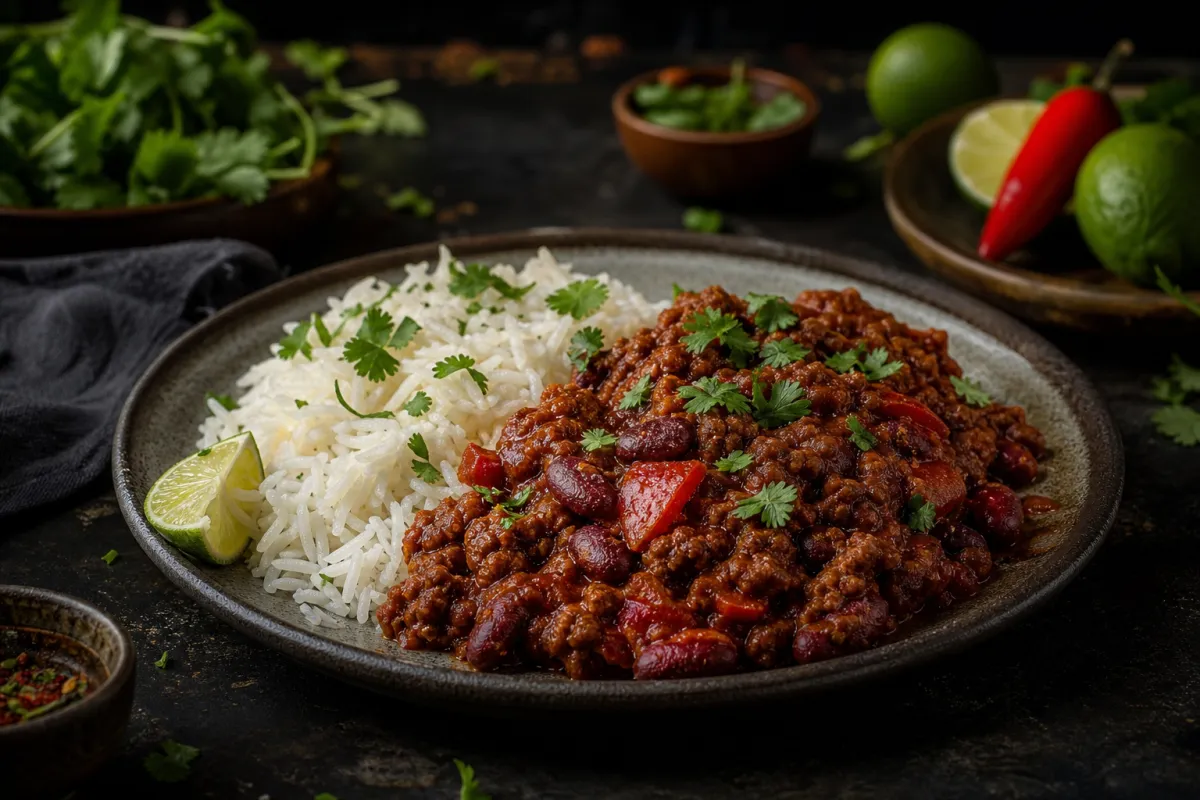
Serve the chilli with the rice, with lime wedges and chopped coriander alongside if using.
Why serve the rice separately?
Keeping the rice separate gives you more control over the texture of the meal. The chilli can simmer until thick and savoury while the rice cooks just before serving, so each grain stays distinct rather than absorbing all the sauce in the pan.
It is also handy when people want different portions. Put the chilli and rice on the table in separate serving dishes, then let everyone choose their own ratio. A little extra rice softens the heat; a generous spoonful of chilli makes the meal more substantial.
For a weeknight dinner, start the chilli first and cook the rice while it simmers. The timings below allow the beef mixture to develop flavour without requiring a long, unattended cook. If your rice takes longer than the stated time, follow the packet directions and keep the chilli gently warm.
Ingredients that make a balanced chilli
Beef mince gives the sauce a savoury base. Choose mince with a little fat for fuller flavour, or use lean mince and add a small splash of oil if the pan looks dry. Break it up as it cooks and make sure it is thoroughly browned, with no raw mince remaining.
Kidney beans add a soft, creamy texture and make the chilli more filling. Drain and rinse tinned beans before adding them. Chopped tomatoes and tomato purée create the sauce; beef stock loosens it enough to simmer, but the final chilli should be thick rather than soupy.
Ground cumin, paprika and chilli powder provide warmth and depth. Chilli powder varies considerably in strength, so begin with the quantity in the recipe and adjust at the end. A little sugar is optional: it can round off sharp tomatoes, but taste before adding it, as some tinned tomatoes are already naturally sweet.
Long-grain rice is an easy partner because it cooks into separate grains. Basmati also works well, though its cooking time and water requirement may differ. Check the packet, especially if using brown rice, which takes longer and may need more water.
How to cook the chilli without drying it out
Brown the mince in a wide saucepan so moisture can evaporate instead of building up around the meat. If the pan is crowded, cook the mince in two batches. Once browned, add the onion and pepper and cook until softened; this gives the vegetables time to sweeten before the liquid goes in.
Stir the spices and tomato purée through the meat for a short time before adding the tomatoes and stock. This coats the ingredients evenly and takes the raw edge off the purée. Scrape the base of the pan as you add the liquid to lift any browned bits into the sauce.
Let the chilli simmer gently with the lid off. A lively boil can make the sauce reduce too quickly and may toughen the meat, while a gentle simmer gives the flavours time to come together. Stir occasionally, particularly towards the end, and add a splash of water if the sauce becomes thicker than you like.
Add the beans for the final part of cooking so they heat through without breaking down. Taste the finished chilli and adjust with salt, black pepper or a little more chilli powder. The seasoning is best checked after simmering, when the sauce has reduced and its flavours are more concentrated.
Cooking fluffy rice alongside
Rinsing rice under cold water removes some surface starch and can help keep the grains separate. Drain it well, then use the water quantity and cooking time on the packet if they differ from this recipe; varieties and brands do not all behave alike.
For the absorption method, bring the measured water and rice to a boil, then cover and reduce the heat to very low. Avoid lifting the lid while it cooks, since escaping steam can leave the top layer underdone. Once the pan is off the heat, leave the rice covered for five minutes before fluffing it gently with a fork.
If you prefer, use a rice cooker and follow its instructions. Keep cooked rice hot until serving, or cool it promptly if you are saving it for later. Do not leave cooked rice sitting at room temperature for an extended period; refrigerate leftovers as soon as they have cooled, ideally within one hour, and reheat until steaming hot.
Serving ideas and easy variations
Serve the chilli over or alongside the rice, with lime wedges and chopped fresh coriander if you have them. Plain yoghurt or soured cream can cool a hotter portion, while grated mature Cheddar adds richness. Keep extras optional so the main dish remains easy to serve to different tastes.
For more vegetables, add diced carrot with the onion or stir in sweetcorn near the end. A small square of dark chocolate can add depth, though it is not essential. If using extra vegetables, check the seasoning and allow a little longer for the chilli to reach a thick, spoonable consistency.
For a milder family version, use less chilli powder and offer chilli flakes at the table. For more heat, add fresh chopped chilli with the onion or increase the chilli powder gradually. If you want a meat-free variation, replace the beef with extra beans and diced mushrooms, and use vegetable stock; cook until the mushrooms have released their moisture and the sauce has thickened.
Leftover chilli keeps well in the fridge for up to three days in a covered container. Reheat it until piping hot, stirring so it heats evenly. Rice needs particular care: cool it quickly, refrigerate promptly, use within one day and reheat only once until steaming hot. Freezing the chilli separately from freshly cooked rice generally gives the best texture.
Planning portions and timing
The quantities here serve four adults, with enough rice to make the chilli a satisfying main meal. For a lighter meal, serve smaller portions with a green salad; for bigger appetites, add bread or increase the rice. If you are scaling the recipe up, use a broad pan and avoid crowding the mince while browning.
The listed preparation time assumes you are chopping the vegetables while the pan heats. The chilli takes about 35 minutes on the hob, and the rice cooks during its simmer. If your rice needs more time, start it earlier; if the chilli finishes first, keep it covered over a very low heat and stir occasionally.
For make-ahead cooking, prepare the chilli a day in advance and refrigerate it once cooled. Reheat gently until thoroughly hot, adding a little water if it has thickened in the fridge. Cook the rice fresh for the best texture and the simplest, safest serving plan.
Frequently asked questions
Can I cook the rice in the chilli?
You can, but it changes the texture and makes the liquid harder to judge. Rice absorbs sauce as it cooks, so the chilli may become dry or the rice may remain firm. Cooking them separately gives more reliable results and lets you adjust portions at the table.
What rice is best with chilli con carne?
Long-grain white rice is a straightforward choice because it cooks into separate grains and has a mild flavour. Basmati works too. Follow the packet instructions for the variety you use, as the water ratio and cooking time can vary.
How can I make this chilli con carne less spicy?
Use a mild chilli powder or reduce the amount, then taste the sauce near the end before adding more. Serve yoghurt or soured cream alongside to soften the heat. Avoid removing all the spices, as cumin and paprika contribute flavour as well as warmth.
Can I make chilli con carne with rice ahead of time?
Make the chilli ahead and refrigerate it in a covered container for up to three days. Cook rice close to serving time for the best texture. If storing cooked rice, cool it quickly, refrigerate within one hour, use within one day and reheat once until steaming hot.
Can I freeze chilli con carne?
Yes. Cool the chilli promptly, portion it into suitable containers and freeze. Defrost it in the fridge and reheat until thoroughly hot, stirring during reheating. Rice can also be frozen, but freshly cooked rice often has a better texture; handle any cooked rice promptly and reheat only once.
What can I serve with chilli con carne and rice?
Lime wedges, chopped coriander, grated cheese, sliced spring onions, yoghurt or soured cream all work well. A simple green salad adds freshness, while tortilla chips or warm flatbreads make the meal more substantial.