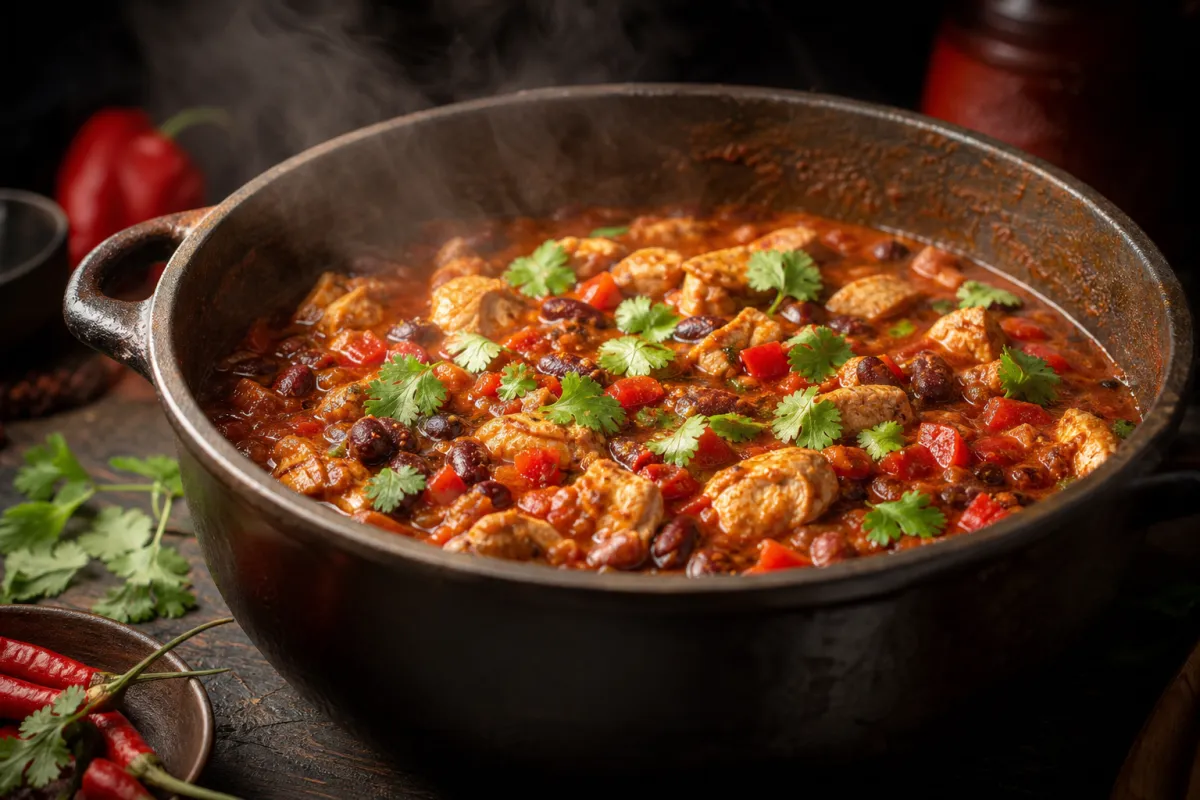
Ingredients
4 ServingsAdd chili gradually and taste — real heat depends on the pepper.
Instructions
- 1
Prepare the onion, pepper and garlic first, then cut the chicken on a separate board. Drain and rinse the beans, drain the sweetcorn if using, and make up the stock. Do not wash the raw chicken.
- 2
Toss the chicken with half the salt and 1 tsp of the cumin. Heat 1 tbsp oil in a wide, heavy-based pan over a medium-high heat. Add half the chicken in a single layer, leave for 2 minutes to colour, then turn and cook for 2–3 minutes more. Lift onto a plate while still pink inside and repeat with the second batch.
- 3
Turn the heat down to medium and add the remaining oil, the onion and the red pepper. Cook for 7 minutes, stirring and scraping up the browned bits from the base of the pan, until softened.
- 4
Add the garlic, the rest of the cumin, the smoked paprika, chilli powder, oregano and tomato purée. Stir for 1 minute without letting the spices scorch.
- 5
Pour in the tomatoes and stock, add the remaining salt and the black pepper, and bring to a simmer. Cook uncovered for 10 minutes, stirring now and then, until the sauce has started to thicken.
- 6
Return the chicken and any juices from the plate. Simmer gently, uncovered, for 15 minutes, stirring occasionally, until the chicken is tender. If you are using breast, leave it out for now: simmer the sauce on its own for 7 minutes more, then add the breast and its juices together with the beans in the next step and cook for 8–10 minutes.
- 7
Stir in the kidney beans and the sweetcorn, if using, and simmer for 5 minutes until piping hot. Cut open the largest piece of chicken: it should be white throughout with no pink, or at least 75 °C on a probe thermometer.
- 8
Take the pan off the heat, stir in the lime juice and taste. Adjust the salt and heat; if the sauce is too thin, lift out the chicken and reduce the sauce on its own for a few minutes before returning it.
- 9
Scatter over the coriander and serve with rice, tortillas or jacket potatoes, with soured cream or grated Cheddar at the table.
Why chicken thighs make the best chicken chilli
Thighs carry more fat and connective tissue than breast, and in a simmered dish that is exactly what you want. They stay moist through a quarter of an hour in a bubbling sauce, take on the cumin and smoked paprika well and are hard to overcook by a minute or two. Breast can be used, and there is a section on it below, but it gives you much less leeway.
Most UK supermarkets sell boneless, skinless thigh fillets in packs that are close to the 600 g used here, and many also sell ready-diced thigh. Either is fine. If you buy whole fillets, trim off any large lumps of fat or gristle but do not strip them bare: the little fat that remains keeps the meat succulent and flavours the sauce.
Cut the chicken into pieces of about 2–3 cm. Smaller than that and the pieces dry out before they have browned; much larger and they take longer to cook through than the sauce needs to reduce. Bite-sized chunks also make this a different dish from a mince chilli: each spoonful has pieces of meat in it rather than a uniform, grainy sauce.
Chicken cooks far more quickly than beef, so there is nothing to be gained from a long simmer. Twenty minutes in the sauce is plenty, and any longer only tightens even forgiving thigh meat. The time goes into the sauce instead, which gets ten minutes on its own before the chicken goes back in.
Building flavour in a milder-tasting pot
Chicken has a gentler flavour than beef, so the sauce has to do more of the work. The spice base is the same one used for a classic beef chilli: ground cumin, smoked paprika, mild chilli powder and dried oregano, fried briefly with the garlic and tomato purée before any liquid goes in. That minute in the hot pan is what stops the spices tasting dusty.
Browning the chicken matters as much for the pan as for the meat. The sticky brown layer it leaves behind is lifted by the onion and pepper as they soften, and it gives the sauce a savoury depth that chicken stock alone cannot. Use a reduced-salt stock, because a full-strength cube plus seasoned chicken can easily tip the pot into saltiness once it has reduced.
Chilli powder varies a great deal on supermarket shelves. The quantity here assumes a mild blend; if your jar is labelled hot or is pure ground chilli, start with a quarter to half a teaspoon and add more at the end. For a smokier, rounder heat, swap one teaspoon of the smoked paprika for a teaspoon of chipotle paste.
Sweetcorn is optional, but it suits chicken well and is a familiar addition in British kitchens: its sweetness balances the smoked paprika and gives the pot some colour. A squeeze of lime at the end matters more than you might expect. It sharpens a sauce that can otherwise taste a little flat next to beef.
How to keep the chicken juicy
Sear the chicken in two batches in a wide pan over a medium-high heat. If you tip it all in at once, the pan cools, the meat releases its liquid and you end up poaching it in pale juices. Spread one batch out in a single layer, leave it alone for two minutes so it colours underneath, then turn the pieces and give them a couple of minutes more.
The chicken does not need to be cooked through at this stage, and it should not be. Lift it onto a plate while it is still pink in the middle and keep any juices that collect; they go back into the pot with the meat. The pieces will finish cooking gently in the sauce, which is where they stay tender.
Keep the simmer gentle once the chicken is back in: small, lazy bubbles, not a rolling boil. If the chicken is cooked but the sauce is still thinner than you would like, do not keep simmering everything. Lift the chicken out with a slotted spoon, reduce the sauce for a few minutes on its own, then return the meat and warm it through.
Using chicken breast instead
If you prefer white meat, use the same weight of breast, cut into slightly larger pieces of about 3 cm. Sear it exactly as above, but return it to the pot later: let the sauce simmer on its own for about 17 minutes in total, then add the breast for the final 8–10 minutes together with the beans. That way the meat spends only as long in the sauce as it needs to cook through.
Mini breast fillets work too, cut in half across the middle. Whatever you use, check the largest piece before serving: cut it open and it should be white all the way through, with no pink and with clear juices. If you have a probe thermometer, the thickest piece should read at least 75 °C.
Breast is leaner and will be a touch drier however carefully you cook it, so a spoonful of soured cream or yoghurt on top is especially welcome here. It also reheats less kindly than thigh, which is worth bearing in mind if you are cooking a batch for the freezer.
Handling raw chicken safely
Do not wash raw chicken before cooking. Rinsing it under the tap does not make it safer; it splashes bacteria across the sink, the worktop and anything nearby. Thorough cooking is what deals with them. Cut the chicken on a separate board with a separate knife, or prepare the vegetables first and the chicken last.
Wash your hands, the board and the knife in hot, soapy water as soon as you have finished with the raw meat, and keep the plate of seared chicken apart from anything that will not be cooked again. Remember that the seared pieces are still raw inside, so do not taste them or leave them sitting about in a warm kitchen while you get on with the sauce.
Keep raw chicken in its packaging on the bottom shelf of the fridge, where it cannot drip onto other food, and use it by the date on the pack. If the chicken is frozen, thaw it fully in the fridge before cutting and searing, because partly frozen pieces brown unevenly and may not cook through in the time given.
Serving, storing and using leftovers
Spoon the chilli over long-grain rice, roll it into warm tortillas or pile it onto jacket potatoes. Soured cream, sliced avocado, chopped coriander and a little grated mature Cheddar all suit chicken; pick one or two rather than putting out the whole spread. Lime wedges at the table let people sharpen their own bowl.
To store, divide leftovers into shallow containers so they cool quickly and get them into the fridge within one to two hours of cooking. Keep them covered and eat within two days. For longer, freeze in meal-sized portions for up to three months at −18 °C for the best quality, then defrost in the fridge.
Reheat leftovers only once, in a pan with a splash of water or in a covered bowl in the microwave, stirring until they are steaming hot all the way through. Cold leftover chilli also makes a quick filling for quesadillas: spread it thinly over a tortilla with some cheese, fold and fry until crisp and piping hot inside.
Frequently asked questions
Can I make chicken chilli with chicken mince?
Yes. Use 500 g chicken mince and cook it as you would beef mince: break it up in a hot pan with the onion and pepper until it is cooked through with no pink, then add the spices and sauce. It is very lean, so you may need a little extra oil, and it needs only about 15–20 minutes of simmering once the tomatoes are in.
Can I use leftover roast chicken?
You can. Make the sauce without the raw chicken, simmering it for about 20 minutes, then stir in shredded cooked chicken with the beans and heat until everything is steaming hot. Because the chicken has already been cooked once, eat the chilli the same day rather than storing it to reheat again.
Can I make chicken chilli con carne in a slow cooker?
Yes, with thighs rather than breast. Sear the chicken and soften the vegetables and spices in a pan first, then transfer everything to the slow cooker with only half the stock, as very little liquid evaporates. Cook on low for about 4 hours until the chicken is tender and cooked through. Use tinned beans, stirred in for the last half hour.
Why did my chicken turn dry and stringy?
Usually because it simmered too long or too hard, or because breast was cooked for as long as thigh. Chicken pieces need only a gentle simmer until they are cooked through. Sear in batches without crowding, keep the bubbles small and reduce the sauce on its own if it needs more time.
Which beans go best with chicken chilli?
Kidney beans are the classic choice and hold their shape well. Black beans give a slightly earthier, softer result, and pinto beans are creamy once warmed through. Use the same drained weight of whichever you prefer. If you cook dried kidney beans, soak them and boil them hard for at least 10 minutes before simmering until tender.
Is chicken chilli healthier than beef chilli?
It is often a little leaner, depending on the cut: skinless breast is the leanest, thigh sits closer to lean beef mince. The bigger differences usually come from the oil, the portion size and the toppings, so go easy on the cheese and soured cream if that is your aim.